Across Africa, the maritime sector is undergoing rapid evolution, necessitating robust frameworks for regional integration, standardized education, and advanced technical capacity building. As the industry moves toward greener, smarter operations, collaborative initiatives between regional bodies and academic institutions are becoming pivotal in preparing the continent for emerging global maritime demands.
On 16 th and 17 th July 2026, the Maritime Organization of Eastern, Southern and Northern Africa (MOESNA) held a consultative workshop in Nairobi with experts drawn from across Africa to discuss the harmonization of Maritime Education and Training (MET) systems. MOESNA is advocating for establishment of a Regional Maritime University (RMU) aimed at strengthening maritime education and improving the region’s competitiveness in the global shipping industry.
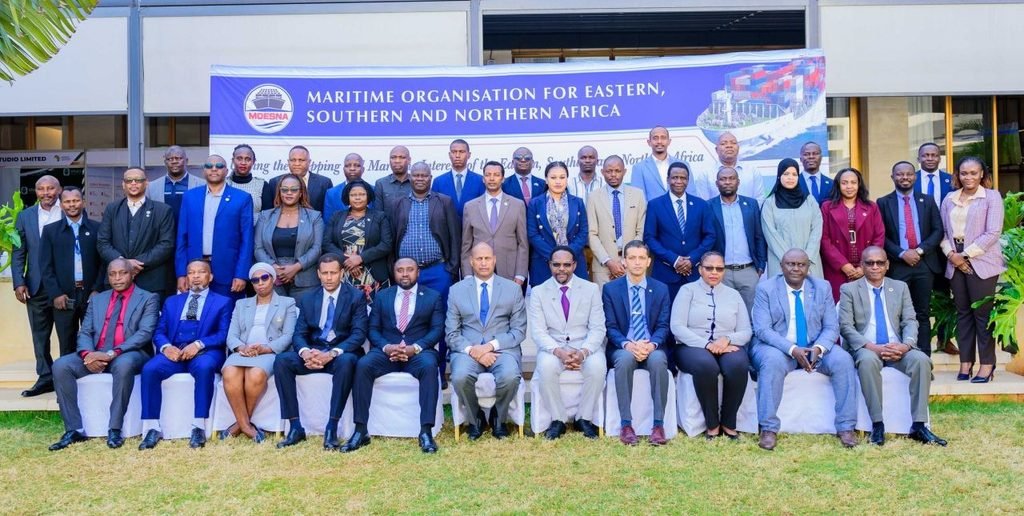
The experts reiterated that the proposed university would also help the region prepare for future changes shaping the maritime sector, including technological transformation, environmental compliance requirements, decarbonization, and the global energy transition agenda leading to 2050.
Prof. Augustine Makokha, the PLEASE project lead (5 th from the right, standing) was among the invited experts who participated in the workshop. The workshop follows the signing of a Memorandum of Understanding between MOESNA and World Maritime University (WMU) in 2025, laying the groundwork for technical cooperation in the establishment of the proposed regional university.
During the Workshop, Professor Anish Hebbar from World Maritime University (WMU) presented results of a survey that revealed significant disparities in maritime training capacity across the region, with some countries having relatively developed infrastructure while others remain largely underserved.
“This fragmentation has affected standardization, collaboration and the region’s ability to respond effectively to global maritime labour demands,” said Prof Hebbar.
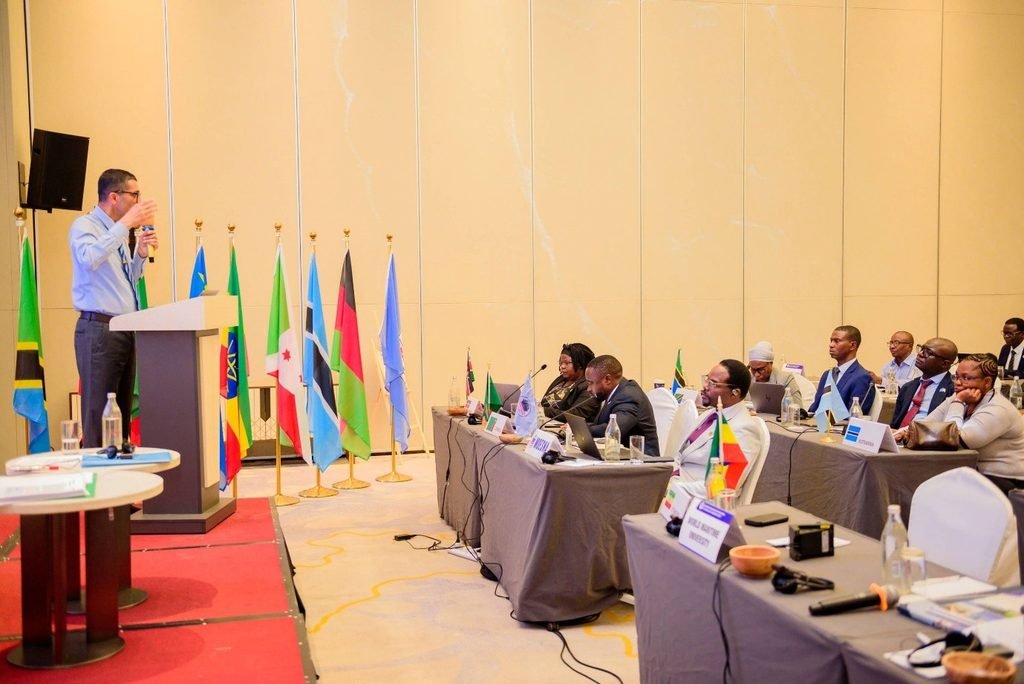
Prof Hebbar noted that involving WMU in the feasibility study provides the process with international credibility and allows the proposed institution to benchmark itself against globally recognized maritime universities and best practices. Moi University was acknowledged for its initiative to strengthen maritime skills capacity and foster partnerships through the ongoing PLEASE project, funded by Lloyd’s Register Foundation.